
Best Wicket Keeping Gloves UK 2026: For Beginners, Juniors and Club Cricketers
Looking for wicket-keeping gloves in the UK? Here are honest picks for beginners, juniors, and club cricketers, with practical advice on grip, protection, sizing, and value.
Wicket-keeping gloves are one bit of kit where I would not just buy the cheapest pair and hope for the best. If the palm grip is poor, catches pop out. If the webbing is weak, the glove can fail after a handful of matches. If the protection is too thin, your hands will know about it after one decent session standing up to the stumps.
For UK club cricket, most beginners and junior keepers do not need £100 professional gloves. But you do need proper wicket-keeping gloves, not batting gloves, and not inner gloves by mistake. It sounds obvious until you see how many listings on Amazon blur those lines.
This guide is focused on realistic options for beginners, parents, and recreational club cricketers. I have not personally tested every pair here, so I am not going to pretend otherwise. Everything below is based on product details, review patterns, sizing, availability and value.
Quick Picks: Best Wicket Keeping Gloves UK 2026
| Product | Best For | Price Range |
|---|---|---|
| GM 606 Wicket Keeping Gloves | Best overall | £36-41 |
| GM Mana Junior Wicket Keeping Gloves | Best junior pick | Around £39 |
| SG Club Wicket Keeping Gloves | Best budget adult option | Around £25 |
| SG RSP Prolite Wicket Keeping Gloves | Best adult club pick when available | Around £32 |
Best Wicket Keeping Gloves UK 2026
1. GM 606 Wicket Keeping Gloves
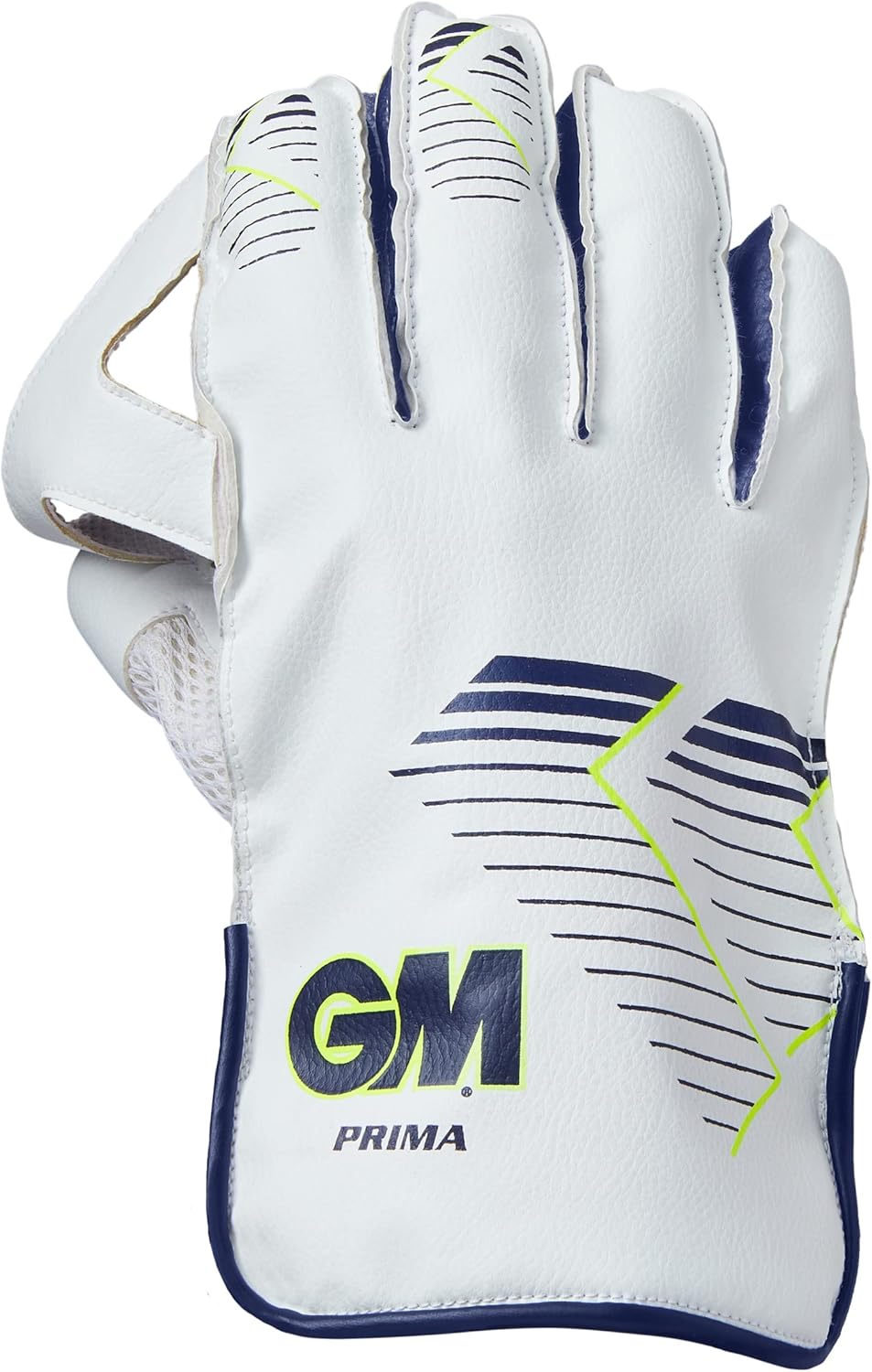
The GM 606 is my top pick from this shortlist. It comes in Junior, Youth, Adult, and Large Adult sizes, which means parents and adult beginners can find the right fit from a single listing without having to navigate multiple products. It has a pimple rubber palm, cotton lining, PU faux leather back, and comes with a reusable storage bag and a printed size guide in the packaging.
That size guide might sound like a small thing, but it genuinely helps. A lot of parents guess between Junior and Youth keeping gloves and end up with something too small or too clunky around the hand. Getting the fit right matters for keeping. A glove that does not close properly makes collecting the ball harder than it needs to be.
The reviews are consistent about the palm grip. Buyers mention the ball sticking cleanly, which is exactly what you want from a keeper's glove. It also holds the #1 Best Seller position in the wicket keeping gloves category on Amazon, which at least tells you plenty of UK buyers are choosing it.
What I like: Full age range in one listing, pimple rubber palm that reviewers specifically praise, GM brand, storage bag and size guide included.
What to watch: The webbing between the thumb and index finger has come up as a durability concern in reviews. I would still pick these as the best all-rounder from this list, but they are not premium match gloves and probably should not be treated as such over a full hard-ball season.
2. GM Mana Junior Wicket Keeping Gloves
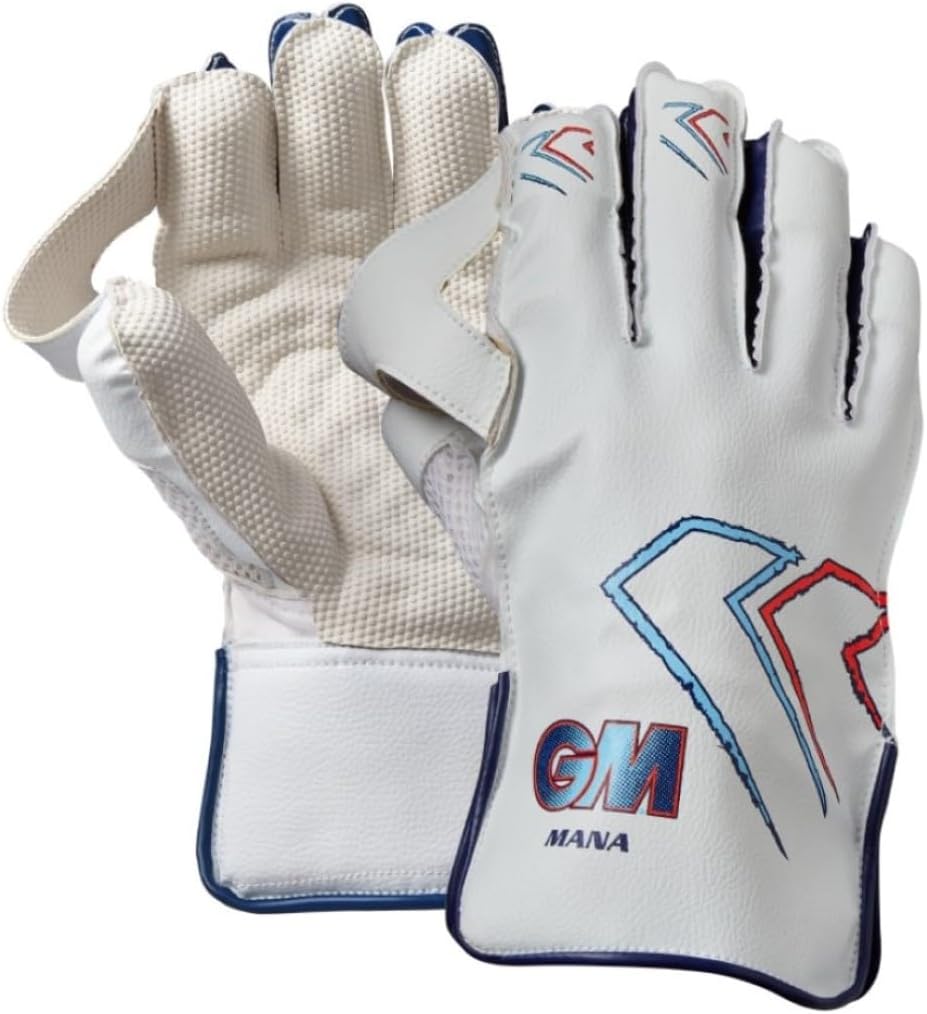
The GM Mana is my junior pick. It is built for younger keepers and uses a PVC faux leather back, cotton lining, and pimple rubber palm. The palm grip is the main selling point, and that matters for juniors who are still working on collecting the ball cleanly through sessions.
For a young keeper starting hard-ball cricket at club or school level, this is a solid first pair. It is not trying to be anything it is not: an entry-level junior glove from a brand that cricket players actually know. The review count is not huge, but the feedback is generally positive around grip and fit.
What I like: Good junior fit, pimple rubber palm, GM brand credibility at a junior price point.
What to watch: Small review base and not always available on Prime. Check the sizing chart carefully for junior-keeping gloves vary more between brands than you might expect.
3. SG Club Wicket Keeping Gloves
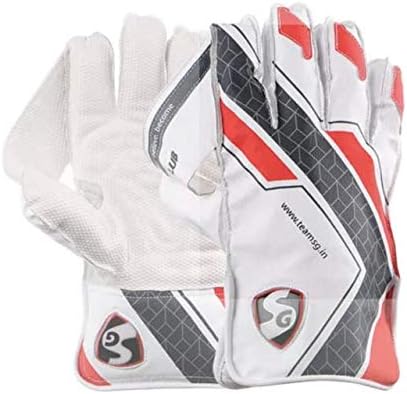
The SG Club is the budget adult pick here. It is a proper main wicket-keeping glove, not an inner, with a rubber grip palm, PVC cuffs and cloth lining. At around £25, it undercuts the GM options by a fair margin.
For an adult beginner, a backup keeper, or someone who only keeps occasionally in friendly or lower-level club cricket, this does what it needs to do at the right price. But I would not use it without inner gloves if you are standing up to hard leather balls regularly. The protection on a budget PVC glove is basic, and your hands will feel it over a long session without something underneath.
What I like: Low price, proper wicket-keeping glove construction, rubber grip palm.
What to watch: Not on Prime, and the delivery estimate at the time of research was much slower than the GM options, nearly a month. Worth checking before you order if you need them quickly.
4. SG RSP Prolite Wicket Keeping Gloves
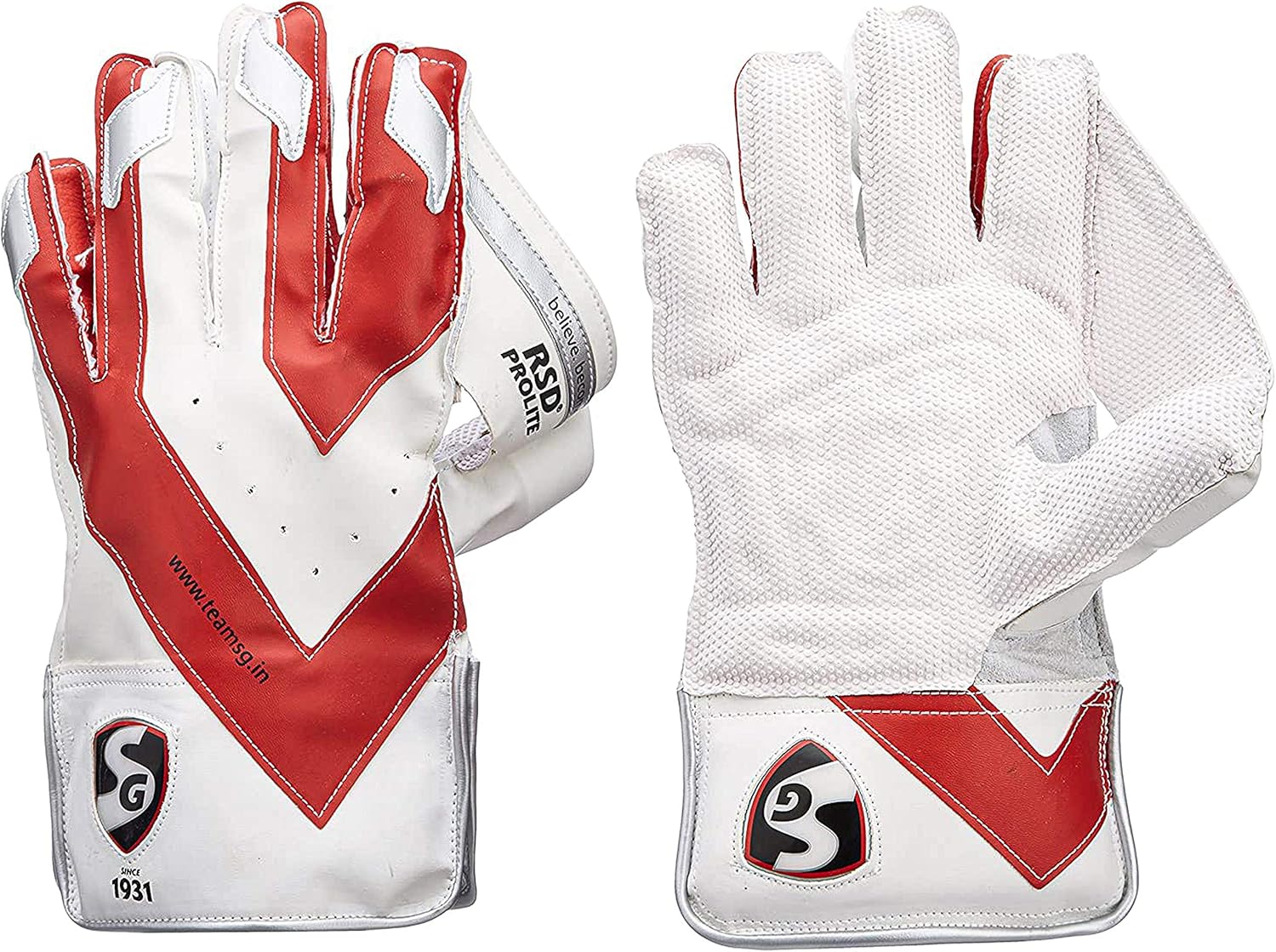
The SG RSP Prolite is the adult club option I would choose if it is in stock when you read this. It has a leather palm, reinforced leather webbing, and is explicitly described as an intermediate-level wicket-keeping glove. That is a real step up from the rubber-palm, PVC-backed options at this price bracket, and with nearly 200 reviews and a 4-star average, there is real buyer evidence behind it.
The problem is that it was temporarily out of stock when I checked, and it is sold by an international seller rather than dispatched directly from Amazon UK. That means delivery times and returns may differ from what you are used to. If it is available, check those details before you buy.
What I like: Leather palm, reinforced webbing, 194 reviews at 4.0 stars, described as intermediate level, which means genuinely more protection than the PVC alternatives.
What to watch: Out of stock at the time of writing, sold by an international seller. Verify availability and delivery before ordering.
5. ND Sports Wicket Keeping Inner Chamois Gloves
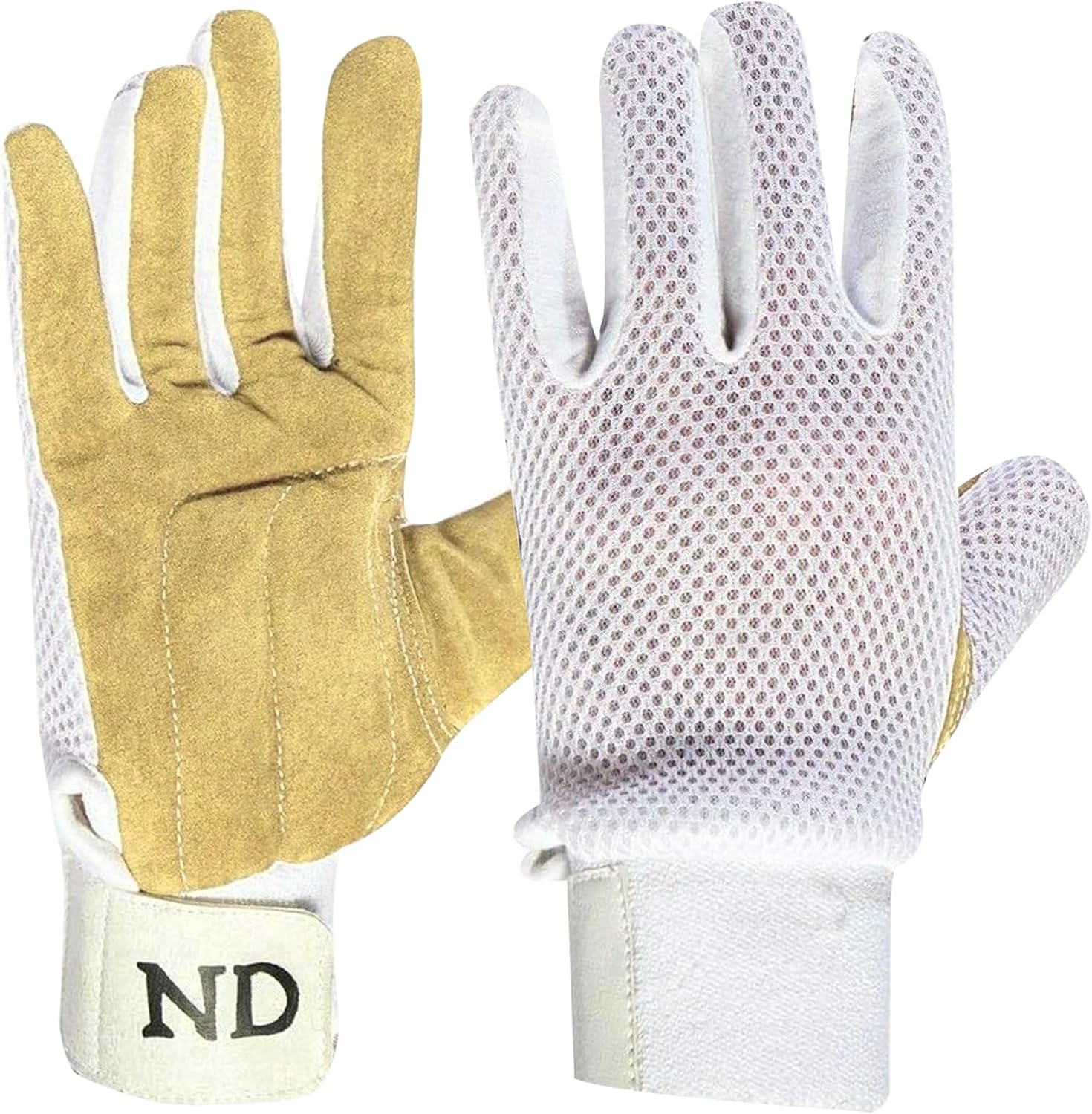
This is not a main wicket-keeping glove. I am including it as a separate recommendation because it is genuinely useful and gets confused with main gloves in some listings.
The ND Sports gloves are wicket-keeping inners, worn inside your main keeping gloves to add padding, absorb sweat and reduce rubbing on your hands. They have a chamois palm, stitched foam padding, a mesh back for ventilation and a Velcro wrist strap. That makes them noticeably more protective than a basic cotton inner. If you are buying budget keeping gloves, adding padded chamois inners is the most practical upgrade you can make.
What I like: Chamois leather palm, stitched foam padding, breathable mesh back, available from Boys through to Men's sizes.
What to watch: These are inners only. They do not replace main wicket-keeping gloves.
Gloves I Would Be Careful With
I would be cautious about the GM Aion wicket-keeping gloves. They look the part, with GM branding, junior sizing and a bright Cyan and Fluro design. But multiple buyers report the webbing between the thumb and index finger snapping after as little as one to four matches. I checked the review pattern across different buyers and the same issue comes up too often to ignore. For wicket keeping gloves, webbing failure is not a minor complaint. If the webbing goes, the glove is done.
I would not make them a main recommendation for junior match play. If anything, they might work for casual nets or soft-ball practice where there is less impact stress on the webbing.
And a general note: do not confuse inner gloves with main wicket-keeping gloves. Inners are useful, but they are not a substitute for proper keeping gloves.
How to Choose Your First Wicket Keeping Gloves
The palm grip is the most important thing
Most budget and mid-range gloves use a pimple rubber palm because it provides a reliable catching grip. A smooth or poor-quality palm will make keeping harder, especially in damp UK conditions where the ball can feel slippery. When you are reading reviews, look at what buyers say about grip specifically, rather than just overall comfort.
Check the webbing reviews carefully
The webbing between the thumb and index finger takes a lot of stress and is where a lot of cheaper gloves fail. If multiple reviews mention the webbing snapping or stitching coming away early, that is a real signal to take seriously. Webbing failure ends the glove's useful life.
Be realistic about protection at budget prices
For juniors learning to keep and adult beginners facing medium-pace bowling, basic protection is often enough. But if you are keeping to adult hard-ball bowling with any pace behind it, you need proper padding and ideally padded chamois inners as well. Do not rely on a thin glove to protect your hands through a full season.
Get the size right, especially for juniors
Do not buy adult gloves for a young player, thinking they will grow into them. Oversized keeping gloves make collecting the ball much harder. Juniors need gloves that fit well enough to close properly around the ball. Check the size chart on the listing and use player height or hand size where it is given.
Add inner gloves to any budget pair
If you are buying keeping gloves at the lower end of the price range, padded chamois inners are the most useful upgrade you can add. They absorb sweat, reduce friction and add extra cushioning on the palm. The ND Sports option above is a good starting point.
Delivery and returns matter with gloves
Wicket-keeping glove sizing can be unpredictable between brands. If there is any uncertainty about the size, I would stick to Prime listings with free returns so you can exchange if needed, especially for parents ordering junior sizes.
Quick Comparison
| Product | Best For | Key Feature | Approx Price |
|---|---|---|---|
| GM 606 | Best overall | Full size range and pimple rubber palm | £36-41 |
| GM Mana Junior | Juniors | Junior-focused GM glove with good grip | Around £39 |
| SG Club | Budget adults | Low price adult WK glove | Around £25 |
| SG RSP Prolite | Adult club cricket | Leather palm and webbing | Around £32 when available |
Final Verdict
The GM 606 is the best overall wicket-keeping glove from this list. It covers the full size range from Junior to Large Adult, has a consistently praised pimple rubber palm, and is the most practical all-round choice for beginners and recreational club players.
For juniors, the GM Mana is my specific junior pick. The grip is the key feature and the fit is aimed at younger hands. The review count is small, but the feedback is positive where it exists.
For adults on a tight budget, the SG Club is the cheapest proper-keeping glove here. Pair it with padded chamois inners and it becomes a much more usable setup. If the SG RSP Prolite is back in stock when you read this, the leather construction makes it the stronger adult option.
The one thing I would not overlook in any pair is webbing durability. A glove can look great, have good grip and a trusted name on it, but if the webbing goes after a few matches, it is done. Read the webbing-specific reviews before you decide.
Frequently Asked Questions
What are the best wicket-keeping gloves for beginners?
The GM 606 is the best beginner option from this list. It covers Junior through to Large Adult sizes, has a pimple rubber palm, and comes from a brand UK cricketers actually know.
Do wicket keepers need inner gloves?
Yes, I recommend them. Inner gloves absorb sweat, reduce rubbing and add extra cushioning on the palm. They are especially useful with budget-keeping gloves where the padding is thinner.
Can I use batting gloves for wicket keeping?
No. Batting gloves and wicket-keeping gloves are built differently. Wicket-keeping gloves have a catching palm and webbing between the thumb and index finger that batting gloves do not have.
Are junior wicket-keeping gloves different from adult gloves?
Yes. Junior gloves are smaller and designed for younger hands to close properly around the ball. Using an adult glove on a child will make catching noticeably harder.
How much should beginner wicket-keeping gloves cost?
For beginners and juniors, £25 to £45 is a realistic range. Below that, the grip and webbing quality tends to drop off. Above £50, you are usually into more serious club or semi-professional kit.
What is the most important thing to check before buying?
The palm grip, the sizing, and the webbing reviews. Webbing failure is one of the most common problems with cheaper wicket-keeping gloves, and it is worth checking before you spend the money.