Best Junior Cricket Helmets UK 2026: Safe Picks for Parents and Young Players
Buying a junior cricket helmet in the UK? This honest guide explains the safest picks for young players, what parents need to check, and why helmet certification matters.
Buying a junior cricket helmet can feel confusing, especially if you are a parent and your child is just starting hard-ball cricket. Sizes are not always clear, some listings mix junior and adult options, and not every product page makes the safety standard obvious.
This is one area where I would be careful. A junior helmet is not just a smaller adult helmet. Junior cricket uses a smaller ball, so the helmet needs to be suitable for junior hard-ball cricket, not just look like a cricket helmet.
If your child is batting in hard-ball cricket, wicketkeeping up to the stumps, or practising against a hard ball in nets, a proper helmet is essential. The ECB says under-18 cricketers must wear a head protector while batting in matches or practice, and it strongly recommends junior players use helmets tested against the junior-sized ball.
For this guide, I have kept the list shorter on purpose. I would rather recommend three options carefully than pad the article with helmets where the safety information is weak.
Quick Picks: Best Junior Cricket Helmets UK 2026
| Product | Best For | Price Range |
|---|---|---|
| GM Purist GEO II Junior | Best overall junior cricket helmet | Around £44 |
| Kookaburra Pro 600 Junior Sizes | Best adjustable junior option | £45-£70 |
My Top Junior Cricket Helmets for UK Parents
1. GM Purist GEO II Junior Cricket Helmet
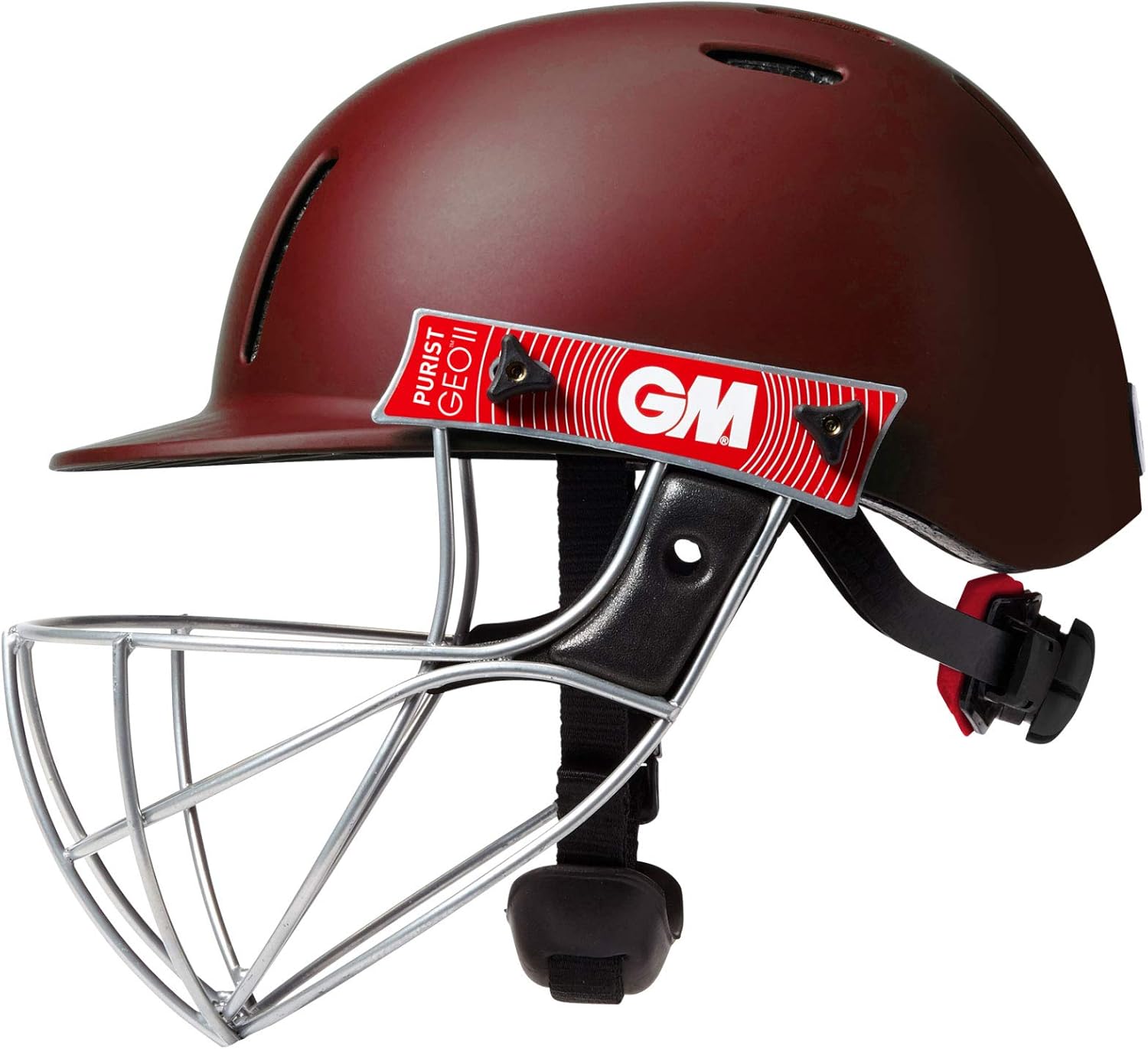
The GM Purist GEO II Junior is my top pick for parents because it gives a good mix of safety information, fit adjustment, and value. It is listed as BS7928:2013 certified, which is exactly the sort of detail I want to see on a junior helmet.
The junior size is listed as 54-59cm, which will suit many young players, but you still need to measure properly before ordering. Do not buy based only on age. Two 11-year-olds can have very different head sizes.
The geodesic steel grille is the main technical feature. It is built to handle impact while keeping the structure precise around the face, which helps reduce the risk of the ball getting through at an awkward angle. From a parent's point of view, the short version is this: it is a proper cricket helmet from a brand that takes cricket seriously, and the right safety information is clearly listed.
What I like: BS7928:2013 listed, proper junior sizing, adjustable dial system, strong grille design, and good value for a junior hard-ball helmet.
What to watch: Some buyers mention sizing guide issues. Measure your child's head carefully and check the fit as soon as it arrives.
2. Kookaburra Pro 600 Junior Sizes
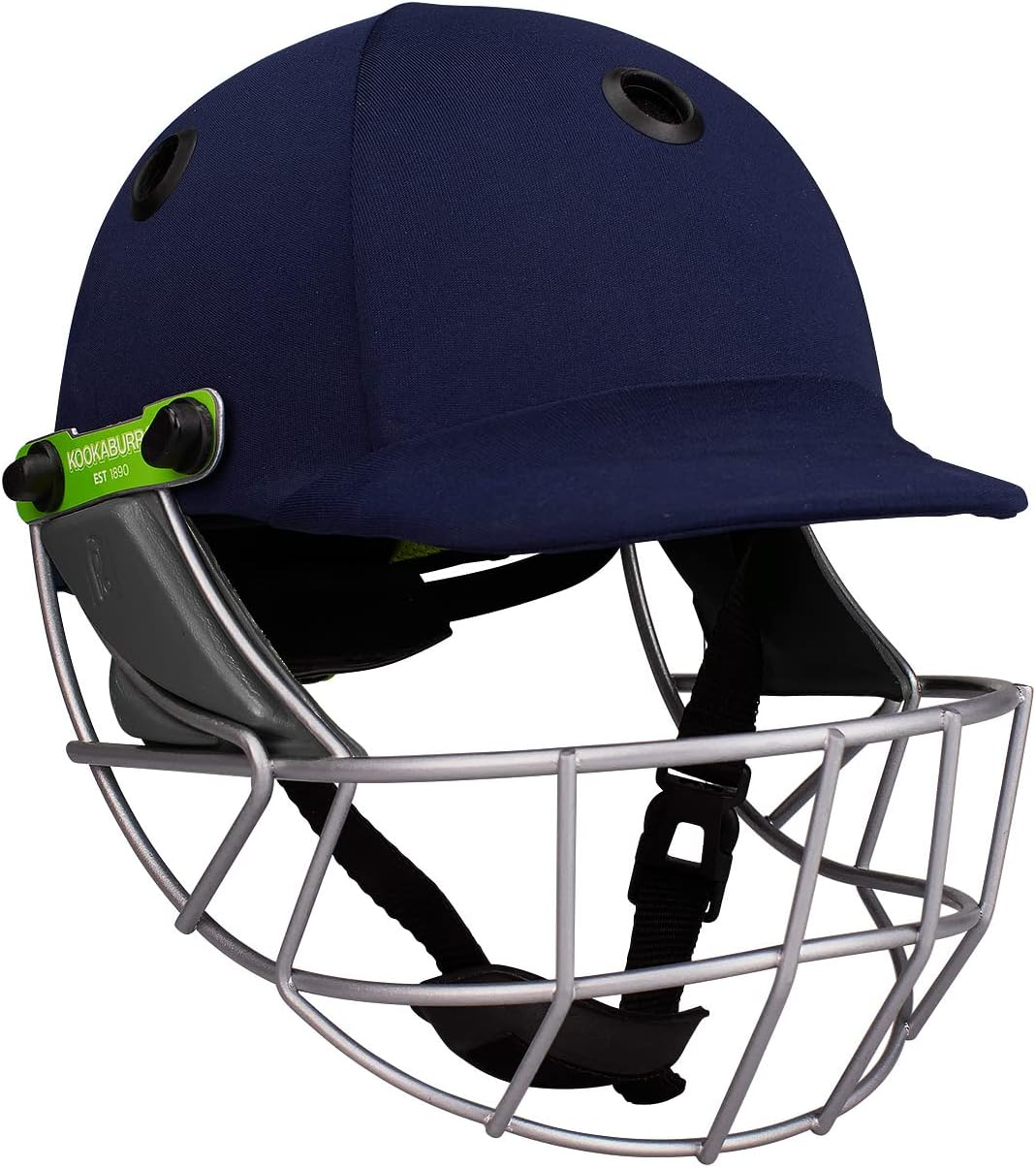
The Kookaburra Pro 600 is a strong junior option because it covers several sizes, including XS/S for juniors and M for youth players. The XS/S size is listed for 54-56cm, while the M size is listed for 56-58cm.
That makes it useful for children who are between junior and youth sizing. The rear adjustment wheel helps fine-tune the fit, which matters because kids grow quickly and helmet comfort can decide whether they actually want to wear it.
The product listing shows BS7928:2013 + A1:2019 certification and says it is suitable for both senior and junior cricket. That makes it easier to recommend than cheaper helmets where the certification is not clearly shown.
What I like: Clear safety standard listed, junior and youth size options, easy rear adjustment, and strong buyer feedback from parents.
What to watch: Some buyers mention size inconsistencies and the adjuster tightening over time. Check the size label and fit before your child uses it in nets or a match.
3. Splay Heritage Academy Cricket Helmet
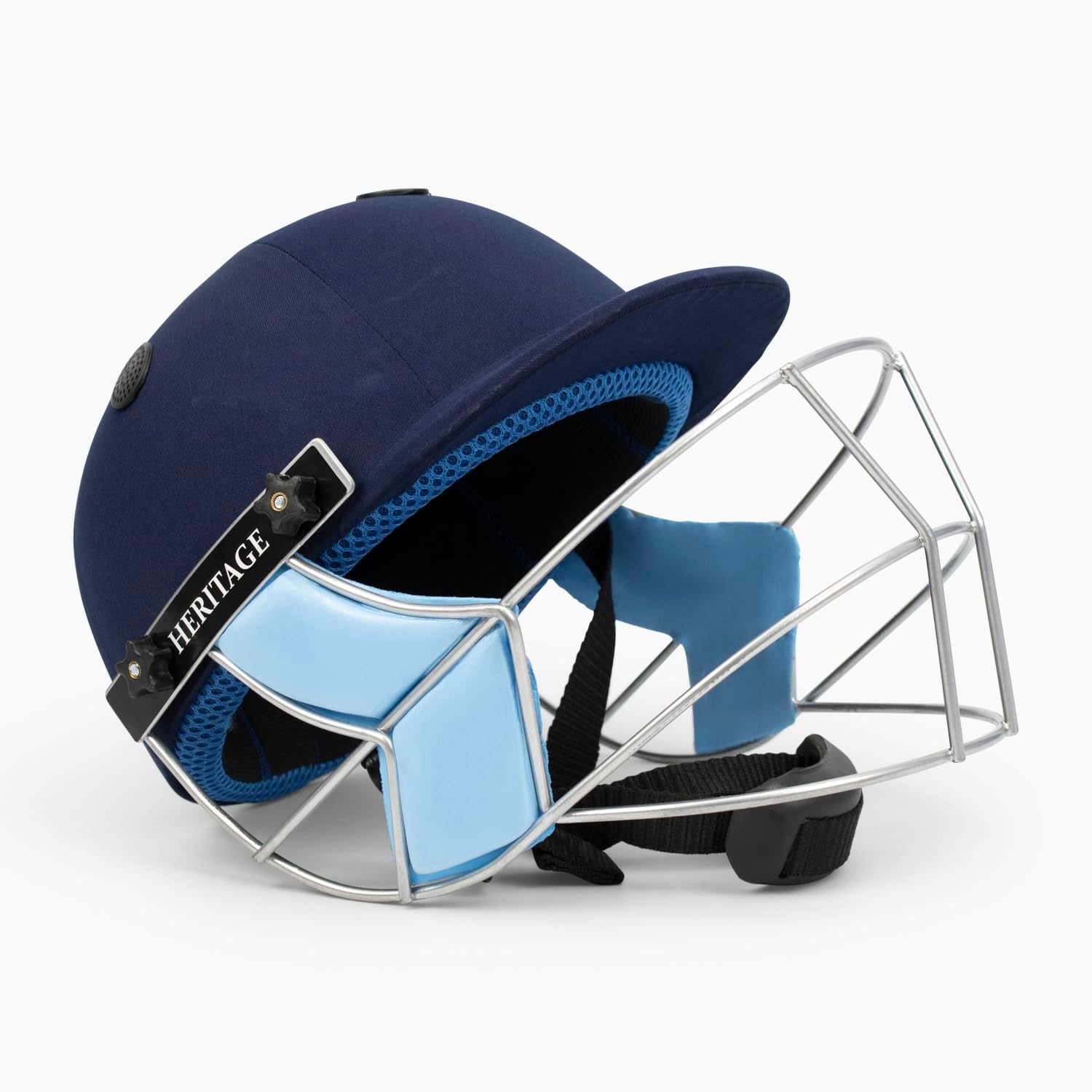
The Splay Heritage Academy is the budget option in this guide. It is cheaper than the GM and Kookaburra helmets, and buyer feedback suggests it can work as a first cricket helmet for children and beginners.
It has a full-face grill, fitted ear guards, foam padding, and ventilation holes. The weight is listed at around 0.8kg, which is reasonable for younger players. For a child just starting cricket, the price will appeal to parents who are already buying a bat, pads, gloves, whites, spikes, and a kit bag.
But there is one important concern. The listing does not clearly show the BS7928 standard, and some buyers have noted there is no visible BS marking on the helmet itself. For me, that means this is only a budget option if you confirm the current safety standard with the seller first.
What I like: Affordable, lightweight, simple design, and useful for beginners if certification is confirmed.
What to watch: The BS7928 standard is not clearly shown in the listing. I would not use this for junior hard-ball cricket unless the seller confirms the correct certification.
How to Choose Your First Junior Cricket Helmet
For parents, the main thing is not picking the nicest-looking helmet. The main thing is making sure it is safe, correctly sized, and suitable for junior hard-ball cricket.
Start with the safety standard
Look for BS7928:2013 or BS7928:2013 + A1:2019. If the listing does not clearly say this, do not assume it is fine. Ask the seller or buy a different helmet.
Junior helmets should be tested for junior cricket, not just labelled as small. This matters because junior cricket uses a smaller ball, and the helmet testing reflects that.
Measure your child's head
Use a soft tape measure around the widest part of the head, just above the eyebrows and ears. Write the number down in centimetres and compare it with the size guide.
Do not guess by age. A "junior" size in one brand may not fit the same as a "junior" size in another brand.
Check the fit when it arrives
The helmet should sit level, not tilted back. It should feel snug but not painful. Ask your child to shake their head gently. If the helmet moves around, it is too loose.
Also check the chin strap. It should hold the helmet in place without rubbing or making it hard to speak.
Do not adjust the grille yourself
The gap between the peak and grille is part of the safety design. Do not bend it, widen it, or try to "make it fit better" at home. If something looks wrong, return it.
Think about comfort
Children are more likely to remove uncomfortable kit. Look for padding, adjustment, and ventilation. A helmet that feels hot or heavy in the garden will feel worse after 20 minutes in the nets.
Check school and club requirements
Some clubs and schools may have their own rules on helmets, especially for hard-ball cricket. Before buying, it is worth asking the coach whether they require a specific standard or type.
Quick Comparison
| Product | Best For | Key Feature | Approx Price |
|---|---|---|---|
| GM Purist GEO II Junior | Best overall | BS7928:2013 listed | £44 |
| Kookaburra Pro 600 Junior Sizes | Adjustable fit | BS7928:2013 + A1:2019 listed | £45-70 |
Final Verdict
The GM Purist GEO II Junior is my best overall pick for most parents. It is from a trusted cricket brand, has the right safety standard listed, and gives a good balance of protection and value.
The Kookaburra Pro 600 Junior Sizes is also a strong option, especially if your child is between junior and youth sizing. The rear adjustment system is useful, and the certification details are clearer than many budget helmets.
The Splay Heritage Academy is the budget pick, but with a clear warning. I would only buy it for hard-ball cricket if the seller confirms the correct BS7928 certification. With junior helmets, saving a small amount of money is not worth taking a safety risk.
Frequently Asked Questions
Does my child need a helmet for junior cricket?
Yes, for hard-ball batting and hard-ball practice. ECB guidance says under-18 cricketers must wear head protection while batting in matches or practice.
What safety standard should a junior cricket helmet have?
Look for BS7928:2013 or BS7928:2013 + A1:2019. For juniors, make sure it is suitable for junior cricket, not only senior cricket.
Can my child use an adult small cricket helmet?
Only if the size, fit, and certification are right for junior cricket. Do not assume an adult small is suitable just because it fits the head.
How do I measure my child for a cricket helmet?
Measure around the widest part of the head, just above the eyebrows and ears. Use centimetres and compare with the brand's size guide.
How tight should a junior cricket helmet be?
It should be snug and stable, but not painful. If it moves when your child shakes their head, it is too loose.
Should I buy a second-hand junior cricket helmet?
I would avoid it unless you know its full history. If a helmet has taken an impact, been stored badly, or is missing safety markings, it is not worth the risk.